Don’t hide it! Nordic police work together for better inclusion
A Nordplus project sheds light on some of the negative everyday experiences that police students with minority backgrounds may encounter when they engage with citizens and colleagues.
By Joan Rask
When a police student with a minority background steps into a police station for the first time, it’s not only the law, patrol techniques and communication with the public that they have to learn. They’re also dealing with issues around identity, belonging and the courage to stand by who they are and to use their own skills.
How do we support police students in that process? And how do field trainers – a kind of training supervisor - and colleagues at police stations avoid creating a situation where the students feel pressure to hide parts of themselves in order to fit in?
This is exactly the question the police in Norway, Sweden, Finland, Iceland and Denmark have been working on with the Nordplus project NORDCOP – Contribution to policing through diversity. The project focuses on how field trainers can best support young students with minority backgrounds.
Kirsti Helene Messel, international coordinator at the Norwegian Police University College, which is the coordinating institution for the project.
— We discovered that all the Nordic countries faced the same challenge regarding recruitment from minority groups. On top of that students with minority backgrounds tells that the competences they thought were of value is not being used in their everyday work, says Kirsti Helene Messel.
A research study from Oslo Metropolitan University* from 2022 shows that students with minority backgrounds have about an 8 percent higher likelihood of dropping out of the police education, and a 5 percent greater likelihood of leaving the profession – compared to colleagues and fellow students with other backgrounds.
Kirsti Helene Messel is a civilian and has worked for the Norwegian Police for more than 20 years, where she has led several international cooperation projects. One of the people she often collaborates with is Antti Talvitie. He is a senior planning officer at the Police University College in Finland, a higher education institution which educates all current and future Finnish police officers, offers a master’s programme in policing and is also a unit of Finnish police .
— Field trainers have a huge impact, because they are guiding the police students in their first real encounters with police work at the stations. The young students are in fact working as police officers, but they are still learning – so the support and mindset of the field trainer really matters. One of the findings of the project group was that if the practical training doesn’t go well, there’s a higher risk of drop-out and that is absolutely not the intention. Allstudents must feel that they belong in the police community – not that they are outsiders, says Antti Talvitie.
Insecurity can lead to dropout
Kirsti Helene Messel points out that police students with minority backgrounds are a diverse group. Whether it is about ethnicity, belonging to a minority for other reasons, having grown up in foster care or having parents with addiction issues, these things can be experienced as shameful or as something that should be hidden. It is therefore important that lecturers and field trainers know how to handle situations where a student feels challenged.
— Some students have told us that they are constantly questioned about their background. It must be exhausting when all you want is to be a good police officer, but everything ends up being about something else – how you dress, what you eat or whether you are ‘loyal’. One student said: ‘When I work in neighbourhoods with many immigrants, people say: ‘You are loyal to them – not to us’ These are strong testimonies that show that it’s not enough to say we want diversity – we also have to show it in our attitudes and in what we do, says Kirsti Helene Messel.
How does the field trainer handle a situation where a member of the public speaks to the student in a language other than the Nordic one? What does the field trainer do if the student is asked: “Where are you really from?” Or if colleagues make assumptions about the student’s loyalty, values or even eating habits?
Questions like that can be difficult to handle for the field trainers, explains Antti Talvitie.
— It was really encouraging to see how committed people were to working with this topic. The police are sometimes seen as old-fashioned or resistant to change – but in fact our experts truly wanted to engage and make things better, says Antti Talvitie.
Both Kirsti Helene Messel and Antti Talvitie point out that the police in all the Nordic countries need diversity – otherwise they do not truly represent the societies they serve. The police are often perceived as being very homogeneous in terms of ethnicity. This project therefore also attracts a lot of attention and support at management level.
— The students don’t want to be seen as different. They want to be police officers, first and foremost. So for us it has been important to show how we can recognise their additional competencies without turning them into something different, says Kirsti Helene Messel.
When differences become a resource
Both of them emphasise that a minority background brings valuable competences to the police: for example, language skills, cultural understanding, insight into different communities and life experiences from other parts of society. On this point, the Nordic countries are very similar, and Antti Talvitie emphasises that Nordic cooperation makes the solutions better.
— We have one police force and we need to find ways to utilise every individuals’ skills and competences. That’s why it is so important for the field trainer to have knowledge, ideas and strategies for how to ensure that all police students have a similar practice period, while being able to encourage the use of individual competences in practice, says Antti Talvitie.
And Kristi Helene Messel adds:
— Diversity shouldn’t be about diversity for its own sake – it should be about competencies. And that’s what we are trying to address,” she says.
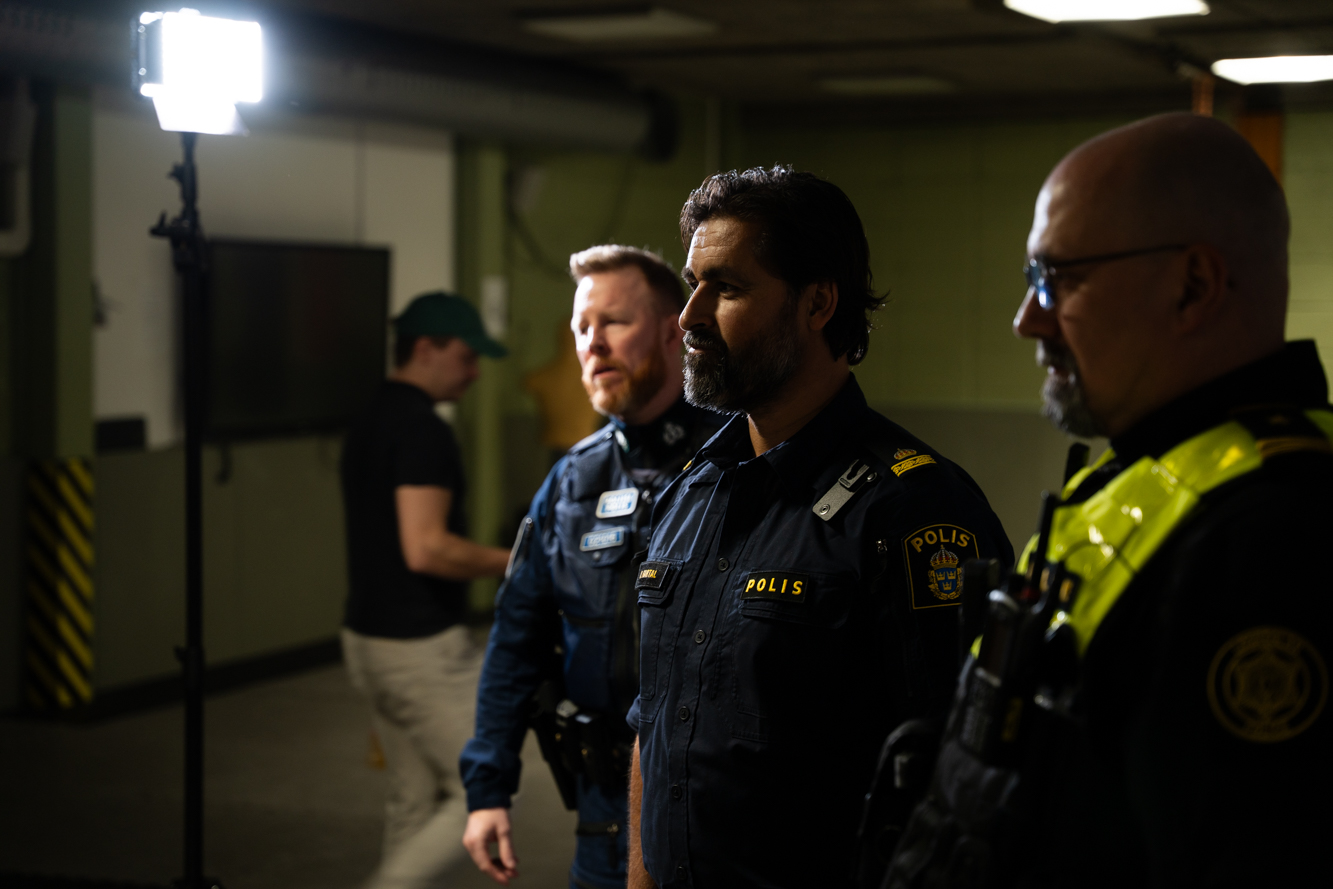
The work of the project group has resulted in a teaching module and a short video, based on existing research from Nordic researchers, existing studies on the topic and testimonies collected from police officers with minority backgrounds.
— Don’t hide! What you keep to yourself may be exactly what the police needs the most - that is the main message in our video and in the teaching materials. We wish to evoke emotions and show how these situations might actually feel, as we believe that understanding the emotion behind any situation is part of the learning process, says Kirsti Helene Messel.
The project group has also developed a small course plan with learning outcomes that each country can adapt and use in their own way. A pilot project has already been planned for implementation at the Norwegian Police Academy to test the results.
No quick fix – but a shared responsibility
Whether the project is a success or not is something the two driving do not feel they can answer yet.
— One of the researchers in the project said: it’s like training shooting skills. If you are to be able to handle sharp situations, you have to train regularly. The same applies to how we engage with people with different backgrounds from our own. It requires constant attention,” says Kirsti Helene Messel.
Antti Talvitie nods:
— We can’t measure the impact of the project to Nordic Police forces the short term. But we can look at whether dropout rates de-crease over time, and we can look at the feedback we collect from both students and trainers, he says.
* Attrition of Police Officers With Immigrant Background
* Politifolk med minoritetsbakgrunn slutter oftere (PoliceForum, Norway – in Norwegian)