Let’s look at what works in the Baltic Sea
An ambitious Nordplus project is determined to keep alive the hope that the Baltic Sea can once again become a healthy marine environment where fish, plants and crustaceans thrive. The project also takes this a step further by exploring how biomass from the Baltic Sea can be used commercially.
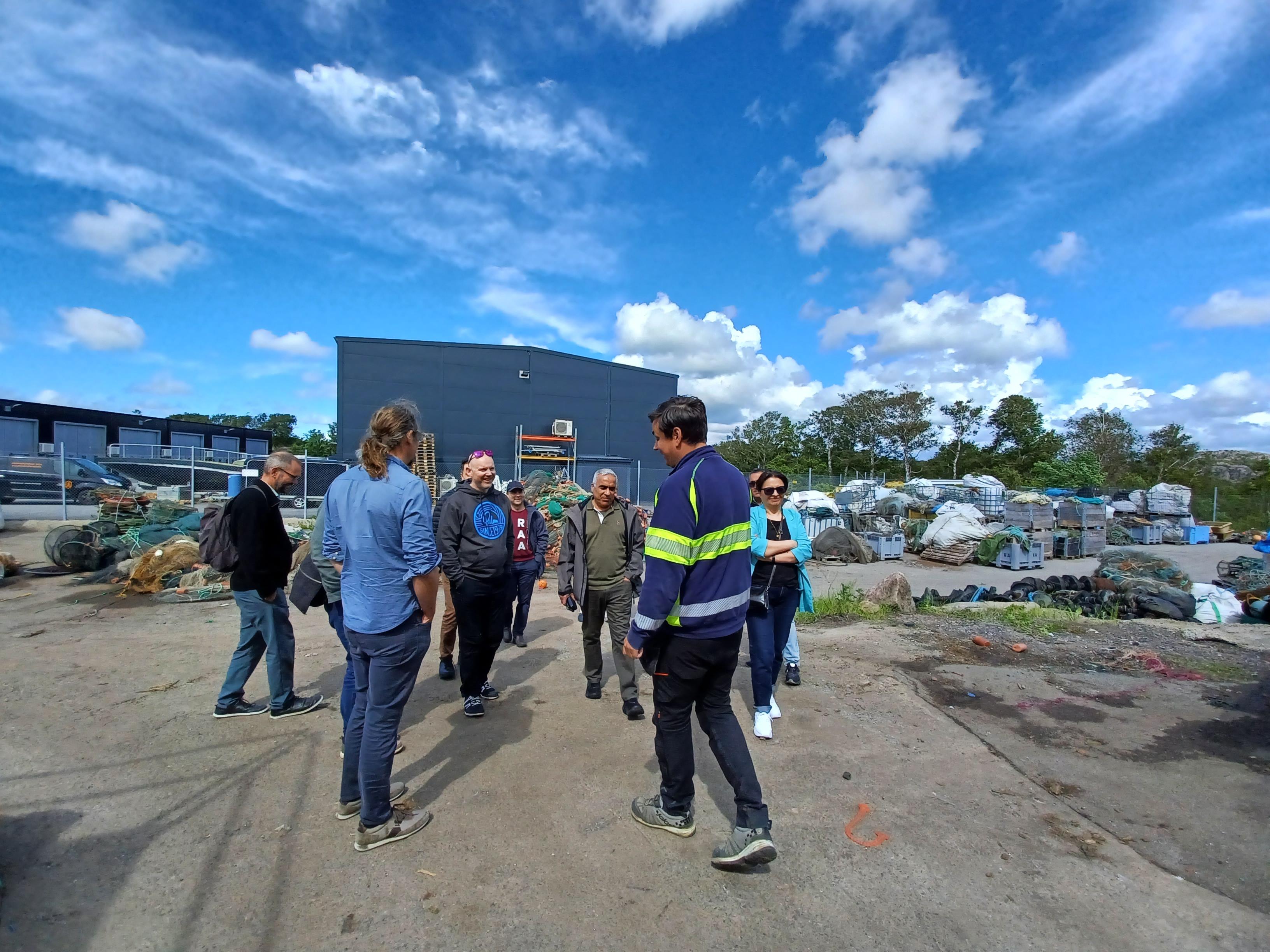
By Joan Rask, journalist
The Baltic Sea is not doing well! This is our baseline: We all want to do everything we possibly can to improve the health of the Baltic Sea.
These are the words of Paula Linderbäck, Head of Sustainability and Tech Lab at Arcada University of Applied Sciences (Arcada), the coordinating institution for the Nordplus project WAVE*.
Together with partners from Sweden, Latvia and Finland, they have established a network of researchers, lecturers, PhD students and higher education students, bringing together expertise from both the natural sciences and economics. The latter is particularly important, explains Paula Linderbäck.
- As engineers, we should not just develop new products that end up causing more problems for the world. In everything we do, we need to think about how we can enhance biodiversity and nurture the environment, says Paula Linderbäck.
She explains that this is an enormous challenge.
- Unsustainable businesses are already well established and very efficient. This creates unfair competition, so we are trying to bring together all the different parts of a new, sustainable value chain that respects planetary boundaries, she says.
Stewart Makkonen-Craig is a Senior Lecturer in Materials Science, also at Arcada.
- Many materials are produced on an immense scale using fossil-based raw materials. This makes production very cheap, so sustainable businesses find it extremely difficult to compete. We are trying to change the way we think about and use materials. We are going through a huge transition, and that is what makes this work so exciting, says Stewart Makkonen-Craig.
Unequal economic playing field
His colleague Tomas Träskman is a lecturer specialising in sustainability reporting.
- My experience is that we need to help students develop their ability to work across different disciplines, because we often see potential for commercialisation in sustainability projects that is not being realised, says Tomas Träskman.
He explains that a visit to a seaweed farm in Sweden was particularly interesting because farming and harvesting seaweed (macroalgae) is especially complex in a climate with rain, frost and snow for half the year. Nevertheless, he and his colleagues in the WAVE project believe that there is untapped potential for using seaweed in both food production and industrial manufacturing. He emphasises that even though the seaweed farm had been operating for a long time, financial concerns remained a major issue.
Rasmus Björkvall, a laboratory engineer at Arcada and a PhD student, also joined the trip.
- We don't have seaweed farms in Finland, so it was great to see how it works in practice. I hope we will have seaweed farms here in a few years, says Rasmus Björkvall.
He explains that one of the benefits of cultivating seaweed is that it absorbs unwanted nutrients as it grows. When the seaweed is harvested, these nutrients, which contribute to eutrophication, are also removed from the sea.
The Latvian partner focuses primarily on students in higher education. Imants Kukuļs is a Leading Researcher at the University of Latvia, and he sees a lot of good reasons to be part of the project.
- The challenges are evolving rapidly, and so are the solutions. We already know quite a lot, but this project provides us with up-to-date, real-world challenges. It means a lot that our students can work on real problems in an international research environment, says Imants Kukuļs.
Stewart Makkonen-Craig nods in agreement.
- The students actually bring a lot to the table. They help us with the work in the lab, come up with new ideas and help take things forward. We hope they will take these skills into new start-up companies that can really benefit the marine environment, he says.
Partners:
- Arcada University of Applied Sciences – School of Engineering, Culture and Wellbeing, Finland
- University of Latvia
- Borås University, Sweden
- LAB University of Applied Sciences, Finland
- Under Ytan AB (private enterprise Finland)
Facts:
Nordplus project: WAVE – Waste to Valuable Materials to Address the Marine Cold Climate Challenge
*About WAVE
WAVE aims to strengthen the Nordic bioeconomy by addressing sustainability challenges through cross-border collaboration, education, and innovation. The initiative focuses on marine waste valorisation, sustainable resource use, and circular economy principles, bringing together students, researchers, and industry partners from across the Nordic and Baltic regions.