Strong interest in the Nordic region among student teachers
An intensive language course at Hanaholmen in Finland for Norwegian and Danish student teachers gave the participants a Nordic experience that left a lasting impression. Everyone recognised the positive potential of communicating in neighbouring Scandinavian languages.
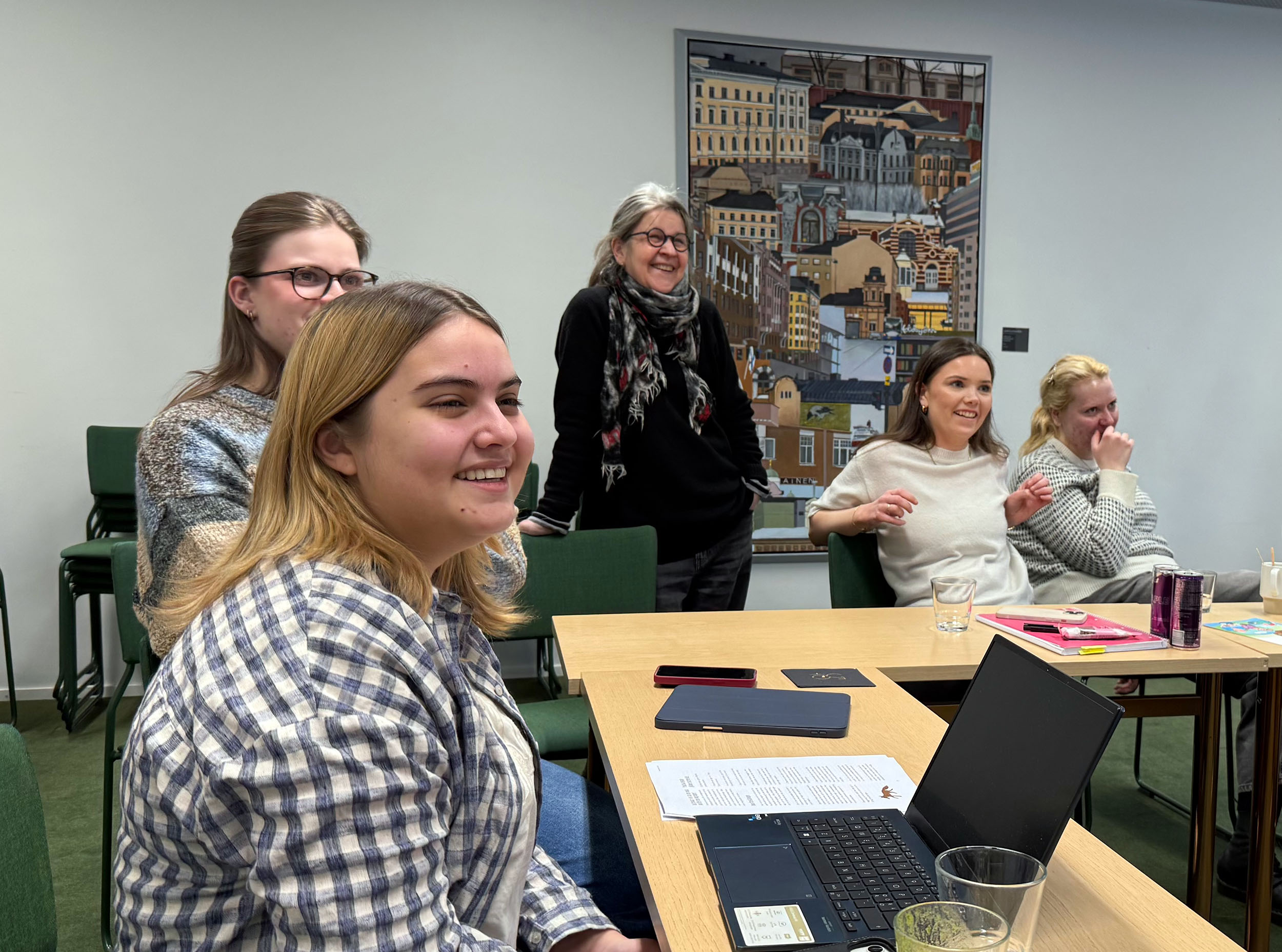
Norwegian students are working on a presentation about Norway for pupils at the Nordic School in Helsinki.
By Joan Rask, journalist
Communicating in Scandinavian languages works remarkably well – provided people understand one another! But this cannot be taken for granted among young people in the Nordic countries. This is one of the messages from the group that took part in the Nordplus project, Language courses for Nordic student teachers.
One of the participants was Åshild Søfteland, a researcher and lecturer at the Department of Language, Literature and Culture at Østfold University College, located south of Oslo, close to the Swedish border.
- In my classes, we talk almost every week about what we experienced or what the students learnt in Finland. Overall, they were extremely pleased, says Åshild Søfteland.
She points out that the entire week-long course was very well organised and carefully planned by the organisers. Looking back, the biggest challenge of the project was getting the students interested in the first place.
- Many of our student teachers understand Swedish very well, and because we live close to the border, it may have been difficult for some of them to see the value of the course. But I think it will be easier next time because they can now hear about the positive experiences of previous participants, says Åshild Søfteland.
Marcus Axelsson is also a researcher and lecturer at Østfold University College, and he too has noticed a significant change in the young people's attitudes towards the Nordic region.
- It was a very educational and positive experience for our students to gain first-hand experience of a multilingual environment and see how Norwegian works as a language. They had to deliver a lesson to a school class, which gave them practical experience of how the children understood Norwegian and the challenges that could arise, he says.
Both lecturers point out that there is a great lack of awareness among young people in the Nordic countries of the potential of neighbouring languages.
- I was a little surprised by how interested our students were in general. Being surrounded by what we call linguistic landscapes, with bilingual signs everywhere in the streets, added a great deal to the experience. It was not part of the programme, but the students themselves asked whether a lecture on the Finnish language could be arranged – and it was, explains Marcus Axelsson.
Finland has in fact two official languages. Although at least 5% of children grow up with parents whose mother tongue is Finland-Swedish, and all Finnish children learn Swedish at school, not many people in the other Nordic countries know that they are able to communicate in Finland with their Scandinavian language. This project aims to address this too.
Liisa Suomela is the project manager on behalf of Hanaholmen, the coordinating institution. She is happy to share the evaluations. That is understandable, since 90% of the students would recommend the course to their fellow students. Many participants said that the most rewarding aspects were the school visits and conversations with Finnish pupils and teachers.
- The young people are in the process of developing their own professional identity, so it is entirely understandable that they place such a high value on the school visits. As organisers, our challenge is to strike a good balance with the academic lectures, because theory is also important, she says.
The programme also included dinners with Finnish student teachers, a visit to Nordic Culture Point and some free time in Helsingfors.
- It is important that the young people get to know Finland while they are here. Participants may be surprised to discover that understanding one another is not always easy. It is certainly possible, but you have to make an effort. And indeed they did! says Liisa Suomela.
Facts:
Hanaholmen is a cultural and cooperation centre for Sweden and Finland.
Quotes from the evaluations:
A Danish student:
"All aspects of the course were good, educational, inspiring and interesting. There was a good balance between presentations at Hanaholmen and excursions in Helsinki."
A Norwegian student:
"This has been a memorable and rewarding trip, during which everyone has had the opportunity to explore their skills in Nordic languages and learn more about them. The trip is definitely worth going on and offers a unique opportunity to learn about the language situation in Finland. I will be able to use this knowledge later in my studies. I would also like to send my regards to the organisers and thank them for a really wonderful trip! I appreciate everything they did for us students!"